




The appointment may strengthen Atiku Abubakar’s visibility and access in Washington, but it is neither a formal endorsement by Donald Trump nor a guarantee of electoral advantage at home.
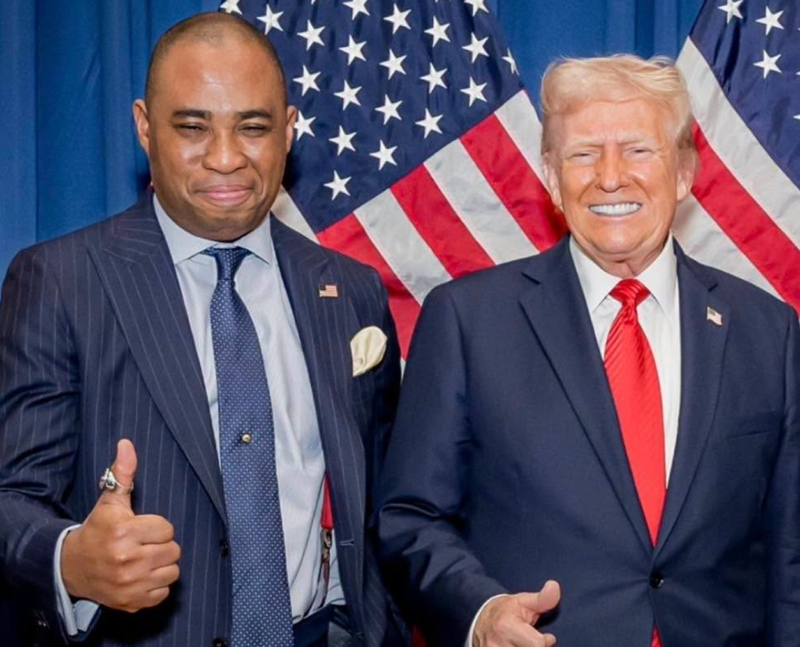
Donald Trump’s reported appointment of Karl Von Batten, a Washington lobbyist retained by former Nigerian Vice-President Atiku Abubakar, has introduced a new international dimension to Nigeria’s presidential election campaign.
Von Batten-Montague-York, the lobbying and strategic advisory firm headed by Mr Von Batten, announced that the US president had appointed its managing partner as a commissioner on a White House presidential commission.
However, the firm did not identify the commission, explain its responsibilities or disclose whether the position carries any authority over American foreign policy. An AFP report also described the body as unspecified.
The absence of those details is significant. A presidential commission appointment is not equivalent to membership of the US Cabinet, which comprises the heads of major government departments and senior officials responsible for implementing federal policy.
There has also been no evidence that Mr Von Batten was appointed because of his relationship with Atiku, or that the decision represents an endorsement of the Nigerian opposition politician by Mr Trump.
Nevertheless, the appointment is politically noteworthy.
A $1.2 million Washington campaign
Documents filed with the United States Department of Justice under the Foreign Agents Registration Act identify Atiku as a foreign principal represented by Von Batten-Montague-York.
The official registration statement says the firm will provide government-affairs representation, strategic advice, reputation management and engagement with members of Congress and executive-branch officials.
A separate contract filed with the Justice Department values the 12-month engagement at $1.2 million. Its stated objectives include strengthening Atiku’s reputation in Washington, explaining his policies to American decision-makers and “counterbalancing” narratives advanced by Nigeria’s incumbent government.
The agreement also provides for the firm to prepare policy papers, arrange meetings and conduct preliminary work towards a possible meeting between Atiku and senior figures in the Trump administration.
Mr Von Batten’s new position could therefore reinforce the impression that Atiku’s lobbyists are operating within, or at least close to, influential Republican circles.
Access may be the immediate advantage
The clearest potential benefit for Atiku is access.
Washington is a city in which personal relationships, political affiliations and institutional credibility can determine whether a request reaches the right desk. An appointment bearing the president’s name could enhance Mr Von Batten’s standing when approaching members of Congress, administration officials and conservative policy organisations.
It could also make it easier for Atiku’s team to secure meetings and present its arguments about Nigeria’s economy, security, democratic institutions and electoral process.
That does not mean American officials will adopt those arguments. Nor does it mean Mr Von Batten will be permitted to use his public position to advance the interests of a private foreign client.
Members of federal advisory bodies may, depending on how they are appointed, become subject to financial-disclosure and conflict-of-interest requirements. The US Office of Government Ethics says many advisory-committee members serve as special government employees and are consequently bound by federal ethics rules.
Until the name and mandate of the commission are disclosed, it is impossible to determine whether the appointment will expand Mr Von Batten’s influence—or require him to withdraw from matters involving Nigeria and Atiku.
A valuable campaign image
The appointment may prove more useful as political symbolism than as an instrument of American policy.
Atiku’s supporters can present it as evidence that their candidate has established contacts at the highest levels of the US political system. In an election in which international credibility, economic competence and democratic legitimacy will form part of the debate, that image may be valuable.
His opponents are likely to offer a different interpretation: that a wealthy Nigerian politician is paying Washington consultants to manufacture foreign approval that he has yet to secure from voters at home.
The Tinubu administration has itself invested heavily in American lobbying. Nigerian reporting has linked the government to a $9 million Washington contract intended partly to communicate its security record and response to allegations of religious persecution.
What is emerging, therefore, is not simply an Atiku lobbying effort but a wider contest between Nigerian political interests seeking to shape how the country is understood in Washington.
Could Washington affect the election?
The United States cannot determine who wins Nigeria’s presidency. It can, however, influence the diplomatic environment surrounding an election.
Statements from Washington on electoral violence, intimidation, result collation or the conduct of state institutions can attract international attention. American officials may also employ diplomatic pressure or visa restrictions against individuals accused of undermining democratic processes.
A well-connected lobbyist could try to ensure that his client’s account of disputed developments reaches policymakers quickly. He could also encourage congressional hearings, official correspondence, public statements or closer scrutiny of Nigeria’s electoral institutions.
This could become particularly important if the election produces serious allegations of manipulation or a contested result.
Yet lobbying has limits. American agencies have their own diplomats, intelligence assessments and institutional interests. They are not obliged to accept the claims of a lobbyist simply because he has Republican credentials or serves on a presidential commission.
Washington must also maintain a working relationship with whichever government is in power in Abuja. US-Nigerian relations encompass counter-terrorism, regional security, trade, energy and diplomatic cooperation—interests that are considerably broader than the ambitions of any candidate.
The election will still be decided in Nigeria
Nigeria’s presidential election is scheduled for 16 January 2027, according to the Independent National Electoral Commission.
Atiku’s prospects will depend far more on opposition unity, voter mobilisation, party structures, regional alliances and public attitudes towards President Bola Tinubu’s record than on developments in Washington.
The campaign is unfolding amid economic hardship, insecurity and dissatisfaction with the political establishment. At the same time, the opposition remains divided, while the governing All Progressives Congress benefits from an extensive national organisation and the advantages of incumbency.
Mr Von Batten’s appointment may help Atiku gain attention abroad and strengthen his ability to communicate with American officials. It may even prove useful if international pressure becomes important during a disputed electoral process.
But it does not place the Trump administration behind Atiku, and it certainly does not deliver Nigerian votes.
For now, its greatest value lies in perception: it gives Atiku’s campaign another argument that it has friends in Washington. Whether that translates into influence—or merely produces an impressive headline—will depend on the commission’s still-undisclosed mandate and on how carefully Mr Von Batten separates his public appointment from his paid work for a Nigerian presidential contender.




Join our Channel...