





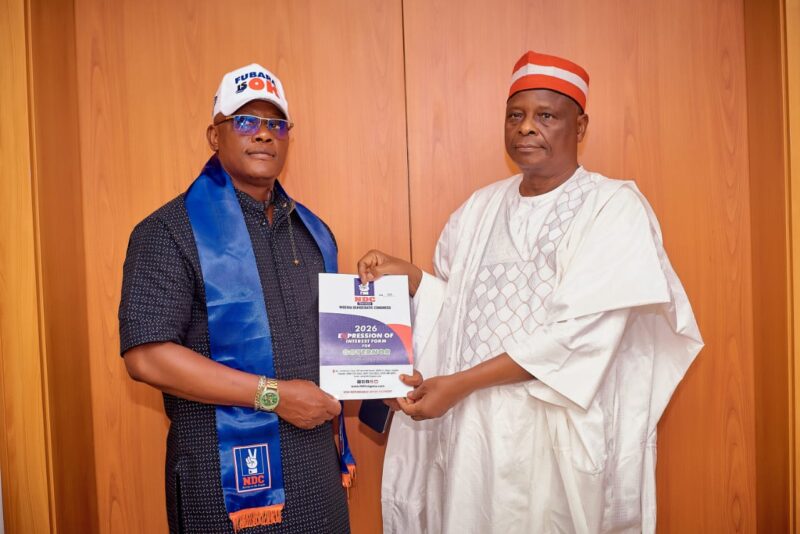
The uncertainty gives way to renewed clarity as Blessing Fubara’s ambition under the National Democratic Congress (NDC) rekindles fresh hope among ordinary Rivers people.…

The political landscape of Rivers State has taken a dramatic turn. With the withdrawal of Governor Siminalayi Fubara from the gubernatorial primaries of the All Progressives Congress (APC), many initially interpreted the move as a retreat from the frontline of the state’s high-stakes political contest. But a deeper reading of unfolding events suggests otherwise: this is not an exit, but a strategic recalibration.
In a political environment often shaped by entrenched interests and power blocs, Fubara’s decision to step aside from the APC primaries reflects more than personal sacrifice—it signals an awareness of the larger forces at play. His public statement emphasized unity, stability, and the supremacy of Rivers State’s collective interest over individual ambition. That alone positions him as a leader willing to take difficult decisions in moments that demand restraint rather than confrontation.
Yet, while Siminalayi Fubara may have bowed out of the APC race, the Fubara political current has not receded. Instead, it appears to have found a new channel.
Enter Blessing Fubara.

Aspiring under the platform of the National Democratic Congress (NDC), Blessing Fubara represents both continuity and evolution. His candidacy introduces a compelling narrative: one that blends the tested administrative experience associated with the Fubara name and the fresh political energy required to confront longstanding systemic challenges in Rivers State.
This is where the moment becomes particularly significant.
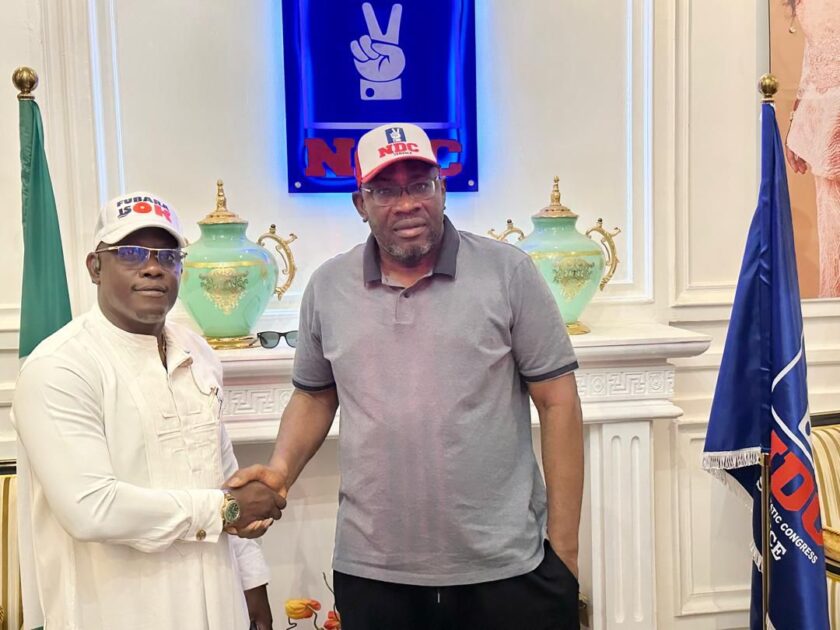
For years, Rivers politics has been criticized for its susceptibility to “cabals”—informal but powerful networks that exert outsized influence on governance, resource allocation, and political outcomes. Whether one agrees fully with this characterization or not, there is broad consensus that the state’s political ecosystem has often struggled to reflect the true aspirations of its people.
Against this backdrop, Blessing Fubara’s emergence offers a symbolic and practical alternative. Symbolically, it signals resistance to political monopolies. Practically, it provides voters with a new platform through which they can express agency.
Importantly, this is not merely about familial ties. While his relationship with the sitting governor naturally draws attention, Blessing Fubara’s aspirations must stand on its own merit—on the clarity of its policy direction, its capacity to mobilize grassroots support, and its commitment to transparent governance.
Still, it would be naïve to ignore the strategic undertones. Siminalayi Fubara’s withdrawal, paired with his brother’s rise in a different political platform, suggests a broader political chessboard in motion. It reflects a recalibration that could reshape alliances, redefine voter expectations, and ultimately alter the trajectory of the governorship race.
For the people of Rivers State, the implications are profound.
This is a moment that calls for discernment rather than blind loyalty. The electorate must look beyond party labels and political rhetoric to assess which candidate—or movement—offers the most credible path toward inclusive development, economic revitalization, and institutional accountability.
Blessing Fubara’s message, as it continues to take shape, leans heavily on hope: hope for a Rivers State where governance is people-centered, where opportunities are not confined to a privileged few, and where the vast economic potential of the state translates into tangible improvements in the lives of ordinary citizens.
That hope, however, must be matched with substance.
Rivers State stands at a crossroads. With its immense oil wealth, strategic importance, and vibrant population, the state has all the ingredients required for sustained prosperity. What has often been lacking is the political will—and the structural independence—to translate potential into reality.
This is why the call to “rally around” a candidate must go beyond emotional appeal. It must be rooted in a shared vision of dismantling opaque power structures, strengthening democratic institutions, and fostering a governance culture anchored in merit and accountability.
If Blessing Fubara can convincingly articulate and embody this vision, then his candidacy may indeed represent more than a political contest—it could mark the beginning of a new chapter.
In that sense, Siminalayi Fubara has not truly exited the race. His influence, ideology, and political network remain very much in play—only now expressed through a different vehicle and in a new format grilled in boldness, firmness and the audacity to put the Rivers people first.
As Rivers State moves closer to the polls, one thing is clear: this is no longer a conventional electoral cycle. It is a defining moment—one that will test the resilience of its democracy, the independence of its voters, and the possibility of charting a new course free from the shadows of entrenched control.
Whether that possibility becomes reality now rests in the hands of the people.



Join our Channel...