






The Biotechnology Advanced Research Centre (BARC), a flagship unit of the Sheda Science and Technology Complex (SHESTCO), in continuation of its leadership in advanced research in biotechnology and genetic engineering, organized its 2024 Annual Research Summit held this week to showcase the Centre’s progress and future direction.

Chaired by Dr. Omoaruemike Okereke, the summit brought together directors, senior scientists, and administrators in Abuja for a multi-day event that combined scientific reviews with strategic planning.
BARC, located along the Abuja–Lokoja Road in Sheda, Kwali Area Council, is one of Nigeria’s most sophisticated biotechnology facilities. It is equipped with cutting-edge tools including thermal cyclers, electroporators, spectrophotometers, CO₂ incubators, bioreactor systems, and specialized DNA extraction and sequencing apparatus. With these resources, the Centre drives research in cancer therapy, genetic engineering, crop improvement, industrial biology, and environmental remediation.

“This week’s summit was not only about showcasing our research,” Dr. Okereke told me after one of the sessions. “It was about aligning our teams with the national priorities of food security, environmental sustainability, and public health, while building Nigeria’s capacity to contribute meaningfully to global biotechnology.”
The summit featured presentations from department heads, who highlighted the Centre’s achievements over the past year. Researchers from the Agricultural Biotechnology Department outlined breakthroughs in plant tissue culture and macro-propagation to enhance food production. Molecular Biology, Genetic Engineering and Biotech Services teams shared progress in gene editing and microbial transformation. Industrial Biotechnology presentations included advances in mushroom cultivation and microbial identification, while the Environmental Biotechnology scientists discussed microbial consortia for cleaning oil-polluted ecosystems.
Dr. Okereke herself presented on her research converting agricultural waste into value-added products. “Nigeria produces millions of tons of agricultural residues annually. By turning this waste into bio-based products, we can create jobs, reduce environmental burdens, and supply industries with raw materials for pharmaceuticals, chemicals, and packaging,” she said. She also discussed projects under her supervision involving gene editing to strengthen staple crops like rice and cowpea against pests and climate stress. “Food security is not optional. With the right tools, including CRISPR gene editing, we can make crops more resilient, which directly impacts nutrition and household incomes,” she explained. Collaborating with the Environmental Biotechnology Department, her team is spearheading microbial-based remediation strategies for oil spills and industrial pollution. “Communities across Nigeria live with the consequences of environmental degradation. Our microbial consortia clean-up model is cost-effective, scalable, and tailored for local conditions,” she added.
The summit doubled as an orientation program for newly recruited staff, reflecting BARC’s role not only as a research hub but also as a training ground for Nigeria’s next generation of scientists. Sessions were designed to introduce new researchers to the Centre’s culture, values, and long-term goals. “Mentorship is central to everything we do at BARC,” Dr. Okereke said. “We want new staff to feel that they are part of something larger than individual projects. Our goal is to train scientists who can think critically, work collaboratively, and apply biotechnology to solve national problems.”
Dr. Okereke’s organizational leadership during the summit was praised by BARC’s Director, Prof. Andrew Iloh, during his closing remarks. “Her exceptional organizational skills, combined with her deep knowledge of molecular biology, made this summit one of the most impactful events in our history,” he said. “She has strengthened internal research synergy, improved coordination across divisions, and positioned BARC as a model for collaborative science in Nigeria.” Throughout the event, Dr. Okereke moved seamlessly between roles: chairing sessions, mentoring young staff, and presenting her own research findings. Her ability to balance scientific expertise with management responsibilities has made her a central figure in the Centre’s progress.
BARC’s portfolio is extensive. In the Medical Biotechnology Department, researchers are advancing prodigiosin for breast cancer treatment, testing genetic therapies for sickle-cell disease, and developing nanotechnology-based drug delivery systems. Environmental Biotechnology teams are experimenting with biosynthesis of gold nanoparticles and encapsulation of bioactive compounds in chitosan microspheres. Agricultural Biotechnology units are working on plant genetic transformation, in vitro multiplication of crops, and somatic embryogenesis. This wide-ranging research is supported by some of the most advanced laboratory equipment available in Nigeria. “Infrastructure is crucial for success,” Dr. Okereke told me. “Having PCR machines, high-capacity centrifuges, UV spectrophotometers, and controlled bioreactor systems allows us to compete with global research institutions, while tailoring our projects to Nigeria’s needs.”
BARC’s work aligns closely with Nigeria’s national development priorities. By focusing on agricultural productivity, cancer research, and environmental sustainability, the Centre contributes to the government’s agenda of food security, healthcare innovation, and climate resilience. “Biotechnology has no borders,” Dr. Okereke said. “When we develop a therapy for breast cancer or engineer more resilient crops, the impact resonates globally. But we are also rooted in Nigeria’s realities, ensuring that our innovations serve our communities first.” She stressed that Nigeria must take ownership of its scientific future. “If we rely only on imported technologies, we will always lag behind. By investing in our own scientists and research institutions, we can shape the technologies that drive our development.”
For Dr. Okereke, science is not simply a profession but a mission. “I chose biotechnology because it offers answers to some of the most pressing problems of our time,” she told me. “Every time I see a project progress from an idea to a practical solution, whether it is a bio-based product, a cleaner environment, or a healthier crop, I am reminded why this work matters.” Her words reflected the sense of purpose that infused the summit. Younger scientists repeatedly pointed to her mentorship and leadership as a source of inspiration.
The summit concluded with commitments from all departments to push boundaries and translate research into practical solutions. Prof. Iloh emphasized that BARC’s success depends on its ability to deliver technologies that reach communities and industries. “Science must not remain on paper,” he said. “Our work must find its way into farms, hospitals, and industries where it can make a tangible difference.” Dr. Okereke echoed this in our final conversation: “If our research ends in academic journals alone, we have failed. Success is when our science improves lives, whether by giving farmers better crops, patients better therapies, or communities cleaner environments.”
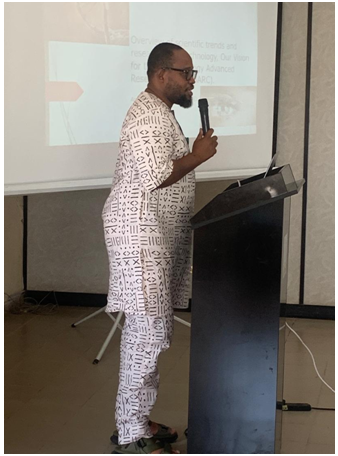
The Annual Research Summit held this week marked a milestone in BARC’s journey. With scientists like Dr. Okereke at the forefront, Nigeria is not only keeping pace with global biotechnology but is also developing home-grown solutions to local challenges. From cancer therapy to crop engineering, from waste conversion to environmental clean-up, BARC’s work demonstrates that Nigerian science has the capacity to address pressing issues while shaping the future of biotechnology. As Dr. Okereke put it: “Nigeria has the talent, and BARC has the platform. The challenge now is to stay committed, keep innovating, and ensure that our work continues to serve the people.”





Join our Channel...